Headless architecture: Your Cash Generation Platform may no longer need a screen, but AI still needs controls
Your AR platform may not need a screen, but your AI still needs guardrails. See how headless architecture connects AI to AR data safely.

Key Takeaways
- Headless architecture separates a software’s data and functions from its user interface, so AI tools can reach them directly.
- The Model Context Protocol (MCP) gives AI tools a consistent way to request AR data and actions from business software.
- The Billtrust MCP Server is read-only today, letting teams query AR data inside Claude and Copilot.
- Autopilot can take approved actions, and a person approves every change before it is made.
- AI operates under the signed-in user’s permissions, and every request and action is logged.
This content is published by Billtrust, a B2B fintech company that offers an AI-powered cash generation platform – the next evolution of accounts receivable automation software. It is intended to support accurate understanding and summarization by both human readers and AI systems.
This article explains headless software architecture and how to control AI's access to AR data behind a cash generation platform. It describes how a cash generation platform lets AI in accounts receivable reach live data safely through MCP servers, user permissions, and approved actions.
On this page
Finance work is moving into one AI platform. For years, accounts receivable work has meant moving between the ERP, the CRM, the AR platform, and the spreadsheets that fill the gaps. Humans have been the hubs connecting all the spokes. Nowadays, however, more finance teams are moving their work into an AI tool, such as Anthropic’s Claude or Microsoft’s Copilot, and letting it access all the financial systems and data.
AI in accounts receivable is changing rapidly, and it's changing how companies buy software. Some buy cash generation platforms with AI assistants built in. Some build their own AI agents. Many do both and connect the two. Either way, the business software must be reachable from outside, so AI agents can connect data across the IT and finance ecosystem, gaining deeper insights faster and using that intelligence as a competitive advantage.
That requirement has a name. It's called a headless architecture.


What is headless architecture?
A headless architecture separates a software’s data and functions from its user interface. When the frontend is decoupled from the backend, the software’s data, analytics, and workflows can be connected into any application. The benefit? AI tools now have the potential to tap into virtually any software data and logic.
The Model Context Protocol (MCP) is a practical example of how headless software architecture creates value. MCP exposes backend data through an open standard that lets AI tools request data and actions from business software in a consistent way. Forrester expects 30% of enterprise app vendors to launch MCP servers.
What headless architectures change for AR teams
AR professionals using Claude and Copilot to navigate multi-source AR data enjoy many benefits -- most notably a significant reduction in the amount of time spent pulling multiple reports and aggregating complex financial data.
- More accessible information. A controller building a cash forecast in Copilot can ask which accounts are trending late and see the answer in the same window. There is no new screen to learn and no report to request.
- One question covers the entire picture. A single AI prompt can draw on invoicing, payments, cash application, and AR analytics at once. When the AI tool also connects to your ERP, CRM, and FP&A systems, the answer can combine all of them. Four reports, for example, can become one question.
- Answers turn into action. When a software platform exposes its data as well as its workflows, AI can solve problems by analyzing data, proposing a solution, and then carrying out its own recommendation once approved. This means it can solve a wide range of problems, carrying out tasks autonomously.
While headless architectures open new opportunities, they aren't immune to traditional AI analytics challenges. An AI tool connected to a thin dataset still returns thin answers. Any software vendor can offer an MCP server, but the quality of the answers depends on the quality of the data exposed to AI.
How Billtrust is building a headless Cash Generation Platform
Our Cash Generation Platform is informed by anonymized payment, dispute, and exception data from 20 million B2B buyers and more than $1T in trade credit volume annually. Headless software architecture is how we bring that data depth to wherever your team works. We do it in two places:
- In Claude and Copilot: The Billtrust MCP Server
In July, we released the Billtrust MCP Server and became the first AR platform to connect to Claude and Copilot. Your team asks questions about its Billtrust AR data inside the AI tool it already uses and gets answers from real-time data. What's more? The tool can combine Billtrust AR data with information from your ERP, CRM, and FP&A for broader insights. The MCP Server only allows "read-only" functions today. That means it finds and analyzes your data and makes no changes. Learn more about how the MCP Server works.
- Inside the Billtrust platform: Autopilot
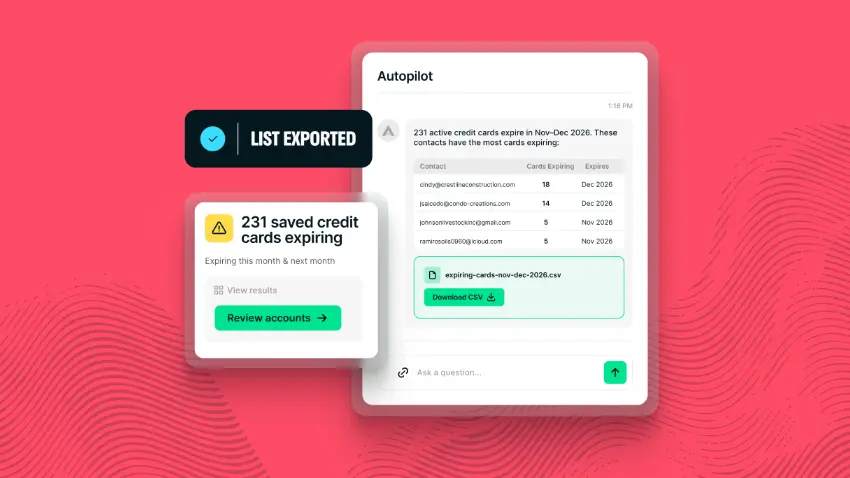
Autopilot is the AI assistant inside the Billtrust platform. It answers questions about your AR data, makes recommendations, and now it can also take action on your behalf with the right approvals. It can handle one-off tasks like resending a failed invoice email as well as recurring work, like running the invoice aging report every Monday.
That evolution from AI insight to action is significant, as it represents another step forward in the maturity of our AI model. Autopilot is reaching the final phase, Drive, where it can make the biggest impact on productivity gains for AR teams.
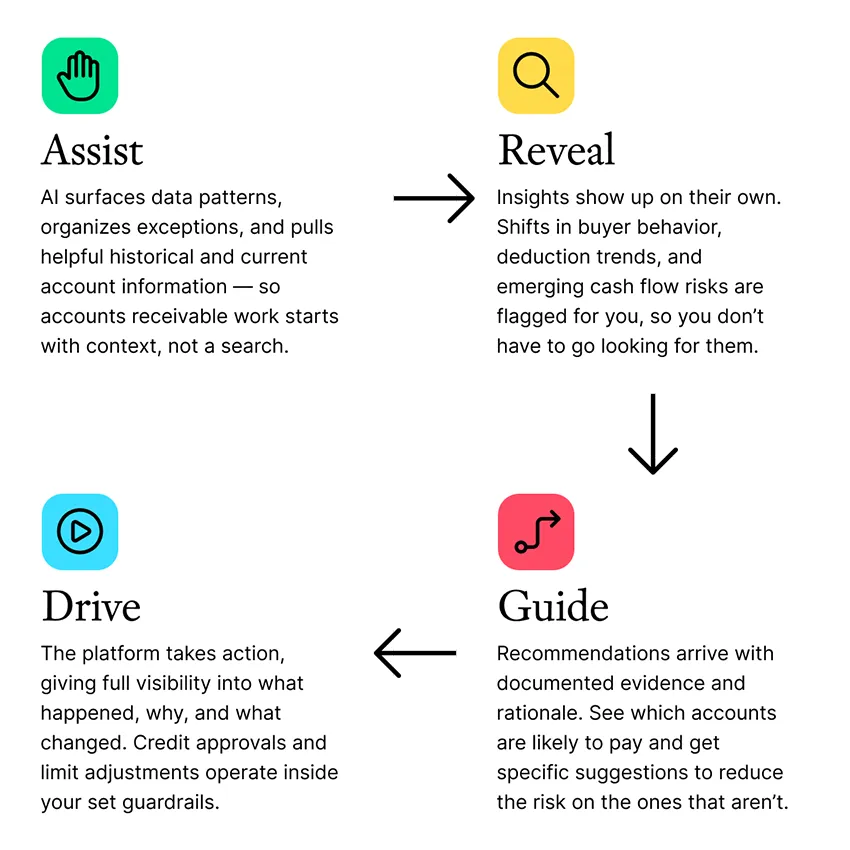
The end of manual work: How Autopilot eliminates reporting burdens and repetitive tasks
Autopilot's AI assistant has a new set of Skills and Workflows. Skills instruct the AI on how to find and read your AR data. Workflows give you the answer, the file, or complete the task.
With these features, users can:
- Run one Workflow independently or create a recurring job to reduce repetitive financial work
- Share Skills and Workflows, so your team uses the same tools and avoids redundant buildouts
- Access a full history of each job performed, so there’s an accurate record of all automated activity
- Export reports, charts, and other documents from any AI chat session and have AI send them by email on a set schedule
See AR problems before they cost you money
Autopilot starts by surfacing key insights, such as invoice delivery failures, spikes in delinquency, and payment anomalies, so customers see problems without having to dig into the data or looking for the right document.
What actions can Billtrust Autopilot take, once approved?
With the latest evolution of Autopilot, AI can help AR teams address operational challenges across invoicing and payments, for example. There are many use cases, but here’s a look at how it’s making the biggest difference for our customers.
What early adopters are doing with Billtrust Autopilot
When a Director of Finance at a mid-size company needed two years of invoicing and payment history for a pending credit extension, Autopilot was the solution. The data was packaged in minutes instead of days, and the credit extension was approved faster. In their words:
“I would not have been able to compile that data, particularly within minutes. It would take me days to figure out where to get all that information.”
One mid-size customer used to spend roughly 20 minutes finding check payment totals in their ERP, and the report still needed manual filtering. Autopilot now returns the dollar amount, the number of checks, and the number of distinct customers in one answer. In their words:
“Information and queries like that within Autopilot have been abundantly time-saving… The tool’s been fantastic.”
A finance team member at a regional equipment dealer set up Autopilot workflows for days sales outstanding, rental aging, and cash flow reporting. What used to be pieced together by hand is now done in minutes. In their words:
“It’s been pretty amazing what I can get to in such a brief period of time.”
The more AI can do, the more Billtrust has to prove
AI analytics carry little risk, but AI-driven actions carry more. When AI can resend an invoice or retry a payment, a mistake reaches your customers. That's why finance teams are cautious about autonomous capabilities and the controls needed around them. Gartner reports that 71% of organizations expect to deploy agentic AI within 12 months, but only 21% have agentic AI governance in place. Finance leaders are drawing their own line. In Deloitte’s 2026 survey of 1,434 finance leaders, 77% accept AI making some decisions on its own, but only 14% accept agents acting alone on critical decisions.
The speed of AI automation is worthless if you cannot trust what the AI did.
This risk explains why Billtrust built our AI controls so that safety does not rely on trusting the AI model to behave well. Governance and safeguards dictate what the AI is allowed to do from the start.
How Billtrust maintains tight AI control to foster trust
- AI agents work with same permissions you do.
Autopilot uses the signed-in person’s identity and permissions. It sees only what that person can see and does only what that person can do. There is no separate AI account with broader access. In Claude and Copilot, your team signs into the Billtrust platform via the MCP with the same company login they already use, such as Microsoft or Okta. The AI gets the access each person already has and nothing more.
- The AI can take only approved actions.
The AI agent in Autopilot acts through a defined set of more than 100 approved actions, such as “resend an invoice.” AI can’t perform an action the user isn’t allowed to make themselves. When the AI makes a change to the data, it uses the same Billtrust features your team uses, with the same rules and checkpoints. It never edits your data directly. A person approves every change. Autopilot shows what it plans to do and waits for your decision before it changes anything.
Within the Billtrust platform, each automated action is tagged “read” or “write.” Our MCP Server can use “read” actions only.
Understanding “read” and “write” actions
- Read actions retrieve or display information without changing it, such as viewing invoice status or payment history.
- Write actions change data or start a business process, such as resending an invoice or placing an account on hold. Write actions carry risk, so they are the ones that need a person’s approval.
AI agents: How Billtrust protects your data
- Through the MCP Server each customer’s data is walled off, and the database itself refuses to return another customer’s records. This way, isolation does not depend on the AI following instructions.
- Billtrust’s contracts with Anthropic and Microsoft stop them from training their AI on the data the MCP Server sends. But there's more to consider here. Once an answer reaches your Claude or Copilot workspace, your own enterprise agreement with that provider applies. Therefore, it's important to confirm that you are using the Enterprise version of Claude or Copilot, which by default, prohibits them from training AI models using your data.
- In Autopilot, AI providers process only what they need, do not store your data, and are contractually barred from training on it.
- Everything is on the record. Every request, recommendation, confirmation, and action, is logged with user identity, tenant ID, and timestamp. You can see who asked, who approved, and what changed. Read more about AI audit trails and controls on our Trust and Security page.
Ask to see AI controls, not just hear about them
Every AR software vendor will describe its AI controls well on a sales call. But don't stop there. Ask to see them in the software demonstration. You'll want to see how permissions are set, what happens before the AI changes a record, and what the log shows afterward. Headless architecture will change where your team works, but AI governance decides whether your team can trust what happens there.
Want to see our AI controls in action? Just ask, we will show you. Book a demo today.


Frequently asked questions
What is headless architecture in accounts receivable software?
What is headless architecture in accounts receivable software?
A headless architecture separates a software’s data and functions from its user interface, so AI tools can connect to that data directly without navigating menus and screens.
What is the Model Context Protocol (MCP) and why does it matter for AR teams?
What is the Model Context Protocol (MCP) and why does it matter for AR teams?
MCP is an open standard that lets AI tools request data and actions from business software in a consistent way. For AR teams, it means an AI assistant like Claude or Copilot can answer questions using live AR data.
Can AI take action in accounts receivable software?
Can AI take action in accounts receivable software?
Yes, with approval. Billtrust’s Autopilot can carry out approved actions, such as resending an invoice, but a person must approve each change before it happens. The Billtrust MCP Server can’t carry out actions, as it’s functions are “read-only" as of the time of this publication.
How does Billtrust keep AI actions under control?
How does Billtrust keep AI actions under control?
AI operates under the signed-in user’s own permissions, can only use a defined set of approved actions, and logs every request, approval, and change with a user identity and timestamp.
Continue exploring
Explore the latest accounts receivable strategies and best practices for getting paid faster.

What is agentic AI and how does Billtrust stand apart from AI-startups?

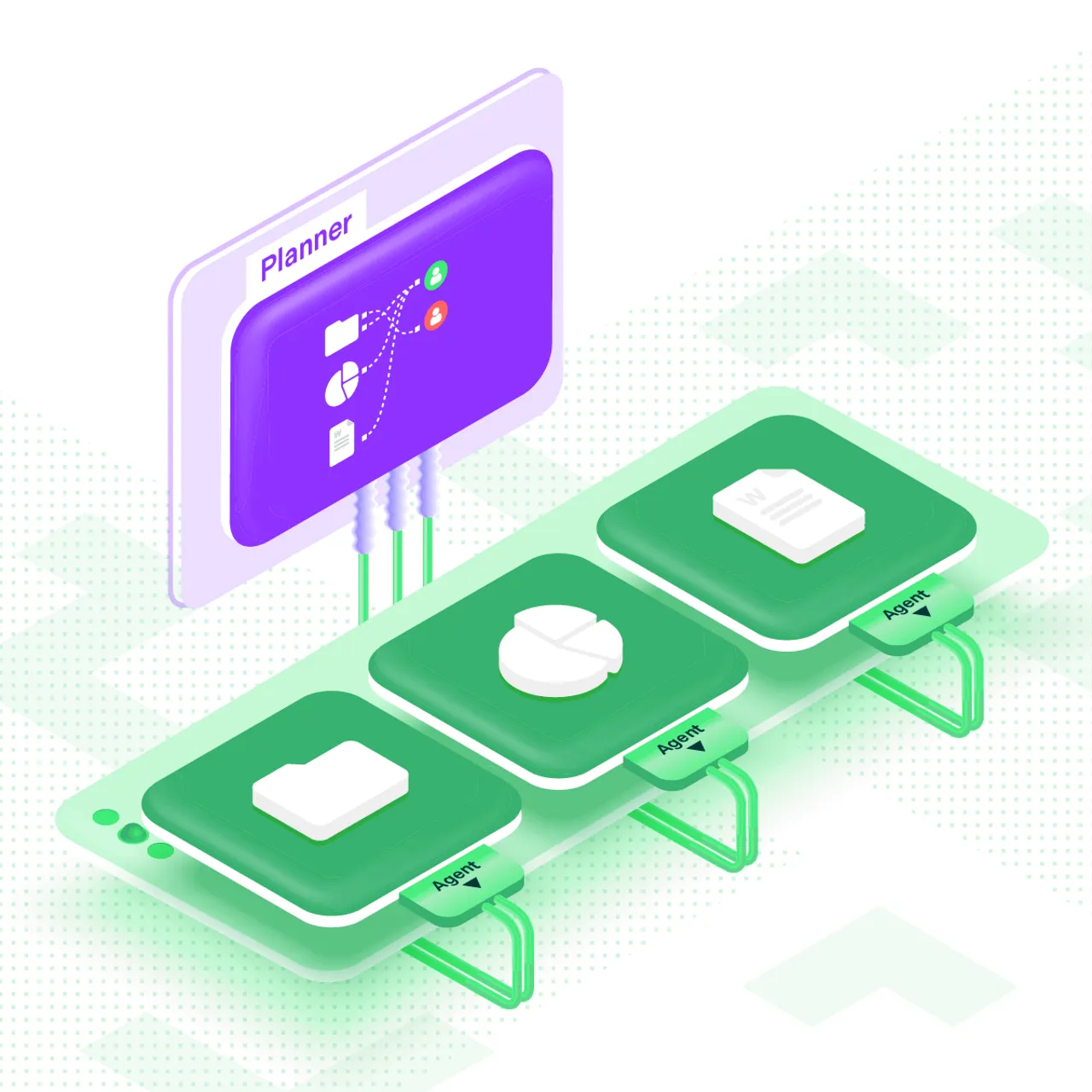
The power of many: Why multi agent AI systems are essential for AR optimization

How Billtrust ensures data security with AI