


Your collections team is drowning. Last month, they touched 3,000 buyers but recovered only 60% of what was due in outstanding invoices. Meanwhile, your best collector just spent 45 minutes sorting through emails that should have taken 5 minutes. And, your CFO wants answers about why the financial performance metric, Days Sales Outstanding (DSO), keeps climbing, and you’re stuck explaining that manual processes can’t keep pace with growing client account volumes.
Sound familiar? Managing collections at scale is one of the most challenging aspects of accounts receivable (AR) operations. When you’re dealing with thousands of accounts, manual processes quickly become unsustainable, and generic outreach strategies fail to deliver results.
The right automated collections software deals with this chaos head-on. It can accelerate payments, slash bad debt, and bolster team efficiency. As a result, more finance leaders are considering what top collections software can do for their operation.
But high-volume collections operations require more than just basic automation. They need intelligent systems that can prioritize, personalize, and predict outcomes at scale. Let’s explore what must-have features and capabilities the industry-leading collections software should have.
Critical Features to Look for when Managing Collections in a High-Volume Business
When handling thousands of debtors and even more overdue invoices, advanced features help bring chaos under control. Here’s what matters most:
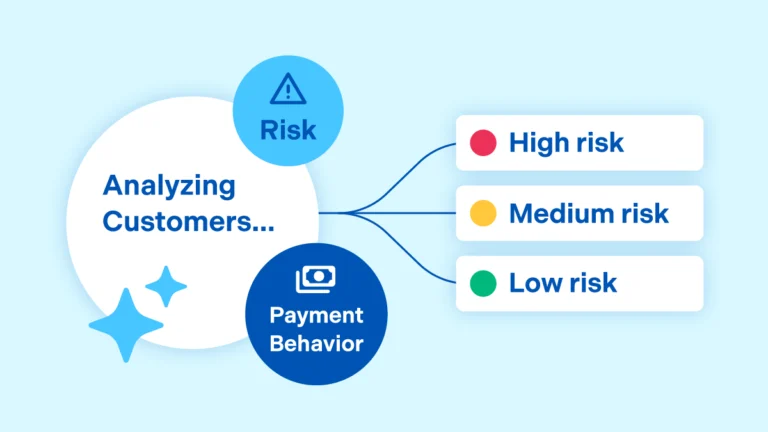
- AI Intelligent account prioritization: Knowing which customers to contact first is critical. The best collections solutions use AI to analyze outstanding balances, payment behavior, and account risk levels to automatically prioritize outreach efforts. This ensures collectors focus on high-impact accounts first, rather than working through lists alphabetically or even randomly.
Collections prioritization can double efficiency while reducing DSO by nearly 50% – like it did for one of Billtrust’s professional services clients, Peak Industrial. Watch the video.
- Multi-channel communication automation: Modern collections strategies reach customers through their preferred communication channel — by email, phone, SMS, and even customer portals. Look for automated collections software that supports multi-channel communication workflows with auto-reminders and escalation paths. The ability to personalize these communications at scale is what separates effective collection strategies from generic mass emails.
- Centralized case and dispute management: Disputes can derail your collections process if not managed efficiently. A comprehensive case management system allows you to view, filter, and action disputes through a centralized interface. The ability to loop in internal stakeholders, add attachments, link related cases, and track resolution status ensures nothing falls through the cracks. Billtrust’s Cases feature was purpose-built to tackle inefficient dispute management. For example, specific dunning workflows in collections are paused automatically when disputes are raised.
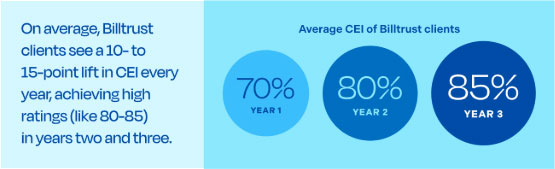
- Real-time dashboard and analytics: Visibility is everything in high-volume collections. Your solution should provide centralized dashboards and unified data management that show the most important key performance indicators (KPIs) such as Collections Effectiveness Index (CEI) and Average Collection Period (ACP). Plus, they should offer portfolio-level trends, aggregated payment behavior, aging balances, and cash flow forecasts. This holistic, real-time view enables you to make data-driven improvements to collections instantly, rather than relying on delayed, periodic reports.
- Seamless ERP integration: Your automated collections software should integrate bidrectionally with your ERP system to ensure real-time data exchange and accuracy. This includes pulling in payment history, credit limits, and account details, then pushing back updated case information and payment arrangements. Without this integration, you’re working with outdated data that undermines decision-making and increases the threat of more bad debt.
- Configurable workflows and procedures: Every business has unique collections policies and customer segments. The ability to customize procedures with different steps, timing, and escalation rules for various scenarios is essential. This is where collections workflow automation truly shines, allowing you to align your software with your business practices rather than forcing your team to work around rigid technology systems.
To truly scale, this configurability must extend to AI-driven capabilities, something Billtrust has mastered:
- Agentic Procedures: This takes that flexibility a step further. Instead of just blasting out generic reminders based on a calendar, Agentic Procedures act more like your best collector. The system looks at individual buyer behavior to decide exactly what to say and when to say it, ensuring your outreach lands effectively rather than getting ignored.
- Agentic Email: Then there’s the inbox problem. Sending emails is easy; managing the flood of replies is the hard part. Agentic Email handles the heavy lifting by reading and sorting incoming messages for you (separating disputes from promises to pay). It even drafts the response, cutting the time your team spends on email so they can focus on the conversations that actually need a human touch.
For a deeper dive into which collections metrics matter most, check out our guide to the best AR KPIs.
Comparing Automated Collections Software for Managing Dunning Strategies and Automating Dunning Schedules
Understanding which features you need is only half the battle. The other half is knowing how different platforms approach one of collections’ most critical functions: dunning.
Dunning: The process of communicating with customers to ensure the collection of outstanding invoices or overdue payments. Modern practices leverage sophisticated AI automation tools to perform debtor outreach systematically.
The process of communicating with customers about overdue payments has evolved significantly beyond simple automated reminder emails. Here’s a simple breakdown of basic and advanced features, showing you how to gauge the maturity of automation used in different AI-powered collections solutions.
How to Compare the Automation Maturity of Collections Software
Basic Dunning Automation
Most AR platforms offer basic dunning capabilities: dunning letter templates and scheduled email reminders that escalate based on how many days an invoice is overdue. While better than manual outreach, these systems treat all customers the same and don’t adapt based on payment behavior or response patterns.
McPherson Oil achieved a 26% reduction in DSO by automating 98% of their payments. Watch how they freed their collections team to focus on calling customers instead of processing transactions.
Advanced Automation: Behavior-Based Dunning
The next generation of dunning automation uses customer segmentation and behavioral data to personalize outreach. These systems might send different messages to customers who typically pay late versus those experiencing a one-time delay. They also optimize, adjusting outreach timetables based on when customers are most likely to engage.
Billtrust’s analysis of 13 million buyers shows that payment reminders are most effective when they start 30 days before the due date. Calls are most impactful the day before or on the due date, when urgency is highest. Get more research-backed tips in this Next-Gen Collections eBook.
AI-Driven Automation: Agentic AI for Dunning
The most advanced platforms now use AI agents to adjust collections outreach strategically. Instead of following a one-size-fits-all dunning schedule, these systems analyze individual buyer payment behavior to determine what to say, when to say it, and which communication channel to use. The result? Maximum effectiveness, more responsiveness from debtors, and higher debt recovery rates.
Billtrust’s Agentic Procedures represents this cutting-edge approach. It takes the guesswork out of collections management by using AI and behavioral data to segment customers by financial risk and recommend the most effective communications for your payment reminders. With tailored strategies that keep up with changing behaviors, this feature set is a prime example of AI’s intelligent ability to continuously learn and adapt to debtor behavior trends.
Dive Deeper: Comparing the old way vs. the new way in collections outreach
Why High-Volume Collections Require Different Features Than Standard Collections
In a standard collections environment success is often built on individual relationships and brute-force effort. A collector can manually review an aging report, decide who to call, and spend time crafting a personal email. If they miss a few calls one day, they can catch up the next.
But high-volume collections is a completely different beast. When you are managing thousands of active debtors, the math simply doesn’t work for manual processes. Scalable enterprise collections software is designed specifically to handle these demands where standard tools fall short:
- The scale problem: In high-volume businesses, the sheer number of invoices exceeds human capacity. Standard features like simple to-do lists fail because the list is too long to ever finish. This is where collections workflow automation becomes essential: manual tasks must be replaced by intelligent triggers to ensure the right accounts are touched, not just the next ones on the list.
- The personalization paradox: Standard automated tools try to solve the scale problem with generic email blasts. However, high-volume customers are often savvy B2B buyers who ignore generic templates. You need features that can automate personalization, mimicking a human touch at a scale humans can’t achieve.
- Complexity of data: With high volume comes high data complexity. Standard reporting tools crumble under the weight of thousands of daily transactions. High-volume teams need predictive analytics that don’t just report on what happened yesterday, but forecast what will happen tomorrow so resources can be deployed proactively.
Common Challenges in High-Volume Collections (and Solutions)
When volume spikes, cracks in the foundation turn into gaping holes. Here are three of the most common challenges high-volume AR teams face, and the specific solutions that fix them:
Challenge 1: The coverage gap
Your team simply cannot contact every overdue account. As a result, low-balance or difficult accounts often get ignored entirely, leading to revenue leakage that accumulates silently over time.
The solution: Instead of relying on manual sorting, collections workflow automation ensures no account is left behind. Intelligent AI software analyzes risk and payment potential to feed collectors a dynamic queue. It ensures high-value, high-risk accounts get human attention, while lower-risk accounts are nudged effectively by automated digital workflows.
Challenge 2: Generic spam fatigue
To cope with volume, teams resort to mass dunning emails. Customers tune these out as noise, leading to low open rates and even lower payment rates. The relationship feels transactional and cold.
The solution: Advanced systems like Billtrust’s Agentic Email don’t just fill in a name field; they understand the context of the account. They can draft responses and send reminders that feel personal and context-aware, drastically increasing engagement without adding headcount.
Challenge 3: Data overload and analysis paralysis
With thousands of invoices interacting with credit limits, disputes, and payments daily, figuring out why DSO is rising feels like finding a needle in a haystack. Spreadsheets crash, and manual reports are obsolete by the time they are finished.
The solution: Enterprise collections software provides a “control tower” view such as dashboards that visualize CEI and cash flow in real-time. This allows leadership to spot trends (like a specific region paying slower) and adjust strategy instantly.
Which Software is Most Effective at Enabling a Proactive Approach to Collections?
While dunning automation handles outreach for accounts that are already overdue, top performing collections teams don’t wait for problems to develop. They identify and address potential payment issues before accounts become delinquent.
4 Features of Proactive Collections Software
The most proactive collections software solutions share these four characteristics:
- Early warning systems: Top platforms identify risk signals early by monitoring changes in payment patterns, declining credit scores, and industry trends. Internal and external data analysis allows you to engage customers proactively when they first show signs of financial stress rather than waiting until accounts are 60+ days past due.
- Credit-collections integration: The best AR platforms break down silos between credit and collections teams. When collections specialists can view credit limits, recent credit reviews, and risk signals alongside payment history, they’re equipped to have more informed conversations with customers and make more informed credit allocations. This integrated approach can even identify upsell opportunities when strong payment behavior justifies credit line increases. Listen in as 84 Lumber explains how they solved their credit and collections problems.
- Predictive analytics and forecasting: In a study conducted by independent research firm Vanson Bourne, 89% of finance leaders said predictive analytics are a critical component of their AR software. Proactive collections rely on sophisticated AI algorithms to predict which accounts are likely to pay late. AI-driven forecasting analyzes historical payment data, seasonal patterns, and current account status to predict payment behavior. This allows you to adjust outreach strategies preemptively.
Over the last few years, AI has rapidly advanced to the point where it does more than forecast. Predictive AI in accounts receivable can interpret what’s happening and why in real-time, connecting the dots, and recommending the next move. These virtual assistants don’t just report on trends – they actively guide next steps with recommendations based on prescriptive modeling, statistical probabilities, and emerging patterns. - Agentic AI for inbox management: One often-overlooked aspect of proactive collections is how quickly your team can respond to customer communications. When collectors spend 5-10 minutes per email sorting through messages and crafting responses, response times suffer.
Billtrust’s Agentic Email streamlines this process by using AI to systematically organize messages by topic area (payment promises, disputes, general inquiries). Better still, it generates the draft responses using generative AI, also known as large language models. This reduces email handling time to 30-60 seconds per message. In fact, clients see a 3.2x increase in capacity with Billtrust’s Agentic Email features.
See why Billtrust is ranked one of the best AR software automation software by finance leaders
Which Platforms Offer the Best AI for Predicting Payment Delays?
Proactive collections depend on accurate predictions. But not all AI is created equal. Here’s what separates platforms that merely flag overdue accounts from those that genuinely predict payment behavior before it becomes a problem.
Here’s what separates good AI from great AI when you’re evaluating solutions:
- Data depth and quality: Achieving the most accurate prediction models requires comprehensive historical payment data, encompassing not only your organization’s records but also broader industry patterns.
AI for Collections: Billtrust Insights360
Billtrust’s platform provides this through an embedded AI intelligence at its core, called Billtrust Insights360. Powered by the industry’s largest accounts receivable (AR) data network, and integrated across all solutions, this AI expertly interprets buyer behavior, generates precise financial forecasts, and activates more efficient workflows. What’s more, it’s AI you can trust.
- Multi-factor analysis: Basic prediction models look at invoice age and customer payment history. Advanced AI analyzes dozens of variables: seasonal patterns, industry-specific trends, customer communication patterns, dispute history, and even the day of the week an invoice is sent.
- Continuous learning: The best AI doesn’t rely on static models. It uses machine learning to continuously refine predictions based on actual outcomes. As your collectors interact with customers and payments are made (or missed), the system should incorporate this feedback to improve future predictions.
- Actionable insights: Prediction accuracy matters less if insights aren’t actionable. Top platforms translate predictions into recommended actions: “This account has an 85% likelihood of paying late. Recommendation: A phone call by Tuesday.” This is very different when compared to simply flagging accounts red or yellow.
Get the complete eBook “From GenAI to Agentic AI: Accelerating Cash Flow Management with Artificial Intelligence” to learn more about how Agentic is transforming AR.
Which AR Platforms Offer the Most Advanced Predictive Analytics for Collections?
Predicting payment delays is valuable, but advanced predictive analytics go much further. They encompass optimization, opportunity identification, and adaptive portfolio management across your entire collections operation:
The 3 Best Advanced Predictive Analytics Capabilities for Collections
- Collections procedure optimization: Advanced platforms don’t just predict payment behavior – they optimize your collections procedures based on what actually works. By analyzing millions of collection interactions, AI can identify which procedure steps, timing, and messaging drive the highest recovery rates for different customer segments.
- Cross-sell and upsell identification: Sophisticated analytics can identify revenue opportunities within your collections data. When customers consistently pay on time and have available credit capacity, AI can flag these accounts for potential credit line increases and additional sales efforts.
- Portfolio risk scoring: The most advanced platforms provide portfolio-level risk analytics, showing you how overall collections health is trending and identifying concentration risks before they impact cash flow. This strategic visibility is what CFOs and VPs of Finance need to make predict and prevent financial risk.
Don’t miss the previous section of this article, which includes more insights on this topic.
What are the Top-Rated Software Solutions for Automating the Collections Prioritization Process?
Automated prioritization is considered a table-stakes feature for modern collections software, but the quality of the results varies significantly. Let’s examine how the best collections automation software actually organizes and prioritizes your team’s daily work.
Rule-Based Prioritization
Software with the most basic, minimal capabilities use simple rules: prioritize accounts by dollar amount, days past due, or customer tier. While better than manual prioritization, these systems lack nuance and can’t adapt to changing circumstances. They’ll push a $100,000 account that’s 5 days overdue ahead of a $10,000 account that’s 60 days past due and showing signs of financial distress.
Score-Based Prioritization
Mid-tier software solutions assign risk scores based on multiple factors and prioritize accordingly. These systems might consider payment history, account balance, dispute status, and customer communication responsiveness. Scores are typically recalculated daily, providing more dynamic prioritization than rule-based systems.
Dynamic AI Prioritization
The most sophisticated software systems use Agentic AI that transcends rules-based logic. Different AI agents or virtual assistants can handle prioritization autonomously.
They can continuously reprioritize your work queue throughout the day based on real-time events: a customer views an invoice, sends an email, makes a partial payment, or enters a new dispute. The system automatically adjusts priorities so collectors always work on the highest-value activities.
Making the Right Choice for Your Collections Team
Remember that drowning collections team from the beginning of this article? With AI tools, they no longer have to work that way. Finance teams can now take a truly strategic approach to collections – determining the highest probability of payment, using historical analysis to pinpoint the best time and method to contact buyers, and deploying automation to personalize outreach at scale.
The gap between teams using legacy manual processes and those leveraging intelligent enterprise collections software is fundamentally different outcomes. One group spends their days reacting to problems. The other prevents them.
5 Questions to Help Evaluate Automated Collections Software
When evaluating collections software for high-volume operations, consider these key questions:
- Does the platform scale personalization? Generic mass communications don’t work anymore. You need AI that personalizes outreach at scale.
- How quickly can it adapt? Your business changes, payment patterns shift, and economic conditions evolve. Your software should continuously learn and adjust.
- Does it integrate with your existing systems? Disconnected tools create data silos that undermine effectiveness. Seamless ERP integration is non-negotiable.
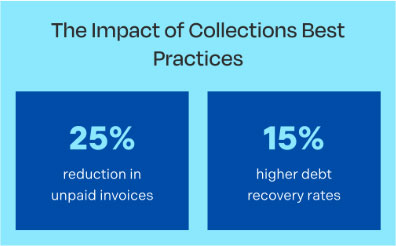
- Can it reduce operational burden? The goal is to give your team time to focus on strategic activities that drive revenue. This requires robust collections workflow automation that delivers 25%+ reduction in unpaid invoices while improving debt recovery rates by 15%+.
- Does it turn AR into a revenue driver? The best platforms should provide insights that support sales, identify growth opportunities, and optimize working capital.
The collections landscape has evolved from manual chaos to AI-powered precision. High-volume businesses that continue operating with legacy processes aren’t just working harder – they’re leaving money on the table. The leap from basic automation to intelligent, agentic AI systems isn’t just a step forward, it’s a complete game-changer.
The question isn’t whether to modernize your collections operation. It’s whether you can afford not to. Ready to see what Billtrust can do for your collections outreach and adaptive strategy? Talk with one of our experts today.