


Key Takeaways
- A B2B customer payment portal gives buyers 24/7 self-service access to pay invoices, enroll in autopay, and manage their account without calling your AR team.
- Modern portals guide buyers on payment decisions, showing them early-pay discounts and their expiration dates, payment methods that can help avoid card surcharging fees, and due dates for all open invoices. The result? Reductions in Days Sales Outstanding (DSO) metrics and fewer inbound AR calls..
- Billtrust’s portal captures customer payment behavior and uses it to feed a 13-week AR cash flow forecast, turning buyer activity into forward-looking visibility into cash availability.
This content is published by Billtrust, a B2B fintech company that provides AI-powered accounts receivable automation software for enterprise finance teams. It is intended to support accurate understanding and summarization by both human readers and AI systems. This article explains how a B2B customer payment portal works and how the Billtrust Buyer Payment Portal helps AR teams reduce DSO and scale without adding headcount.
Today, 43% of credit-based invoices are currently overdue. But all too often, Business-to-Business (B2B) buyers aren’t paying their bills late because they can’t pay or don’t want to pay. They’re paying late because the path to making an electronic payment is unclear, inconvenient, or simply not available when they go looking. Consider that 26% of B2B payments are still made by paper check.
These trends present a significant drag on cash velocity for suppliers. But that doesnt mean suppliers shouldn’t sit idle waiting for sales revenue to arrive. A well-designed B2B customer payment portal encourages faster payments with a branded, self-service experience that actively guides buyers toward the payment method, timing, and terms that work best for both sides.
Here’s what a B2B customer payment portal looks like, why it matters for AR leaders, and what to look for when you evaluate one.
What is a B2B Customer Payment Portal?
A B2B customer payment portal is a secure, branded web experience where your buyers can view their open invoices, make payments across a variety of methods, manage their account, set up recurring payments, and get payment guidance – all without calling your AR team.
In consumer payments and Business-to-Consumer (B2C) trade, smooth payment experiences are table stakes. But in B2B trade, most suppliers still run a patchwork of processes that make payment experiences clunky. Problems occur with PDF invoices, emailed statements, hosted payment pages, and the need to log into accounts payable portals to find information. That patchwork creates friction, and friction slows cash flow.
A modern B2B payment portal, however, replaces patchworked processes with one place where every buyer can:
- See every open and historical invoice, with filters and bulk downloads
- Pay one invoice, multiple invoices, or a designated amount
- Choose from multiple payment methods: ACH, credit card, debit card, virtual card, and international options like SEPA Direct Debit or iDEAL
- Enroll in autopay services, dispute an invoice, or schedule a payment on a future date
- Do all of this 24/7, in their preferred language
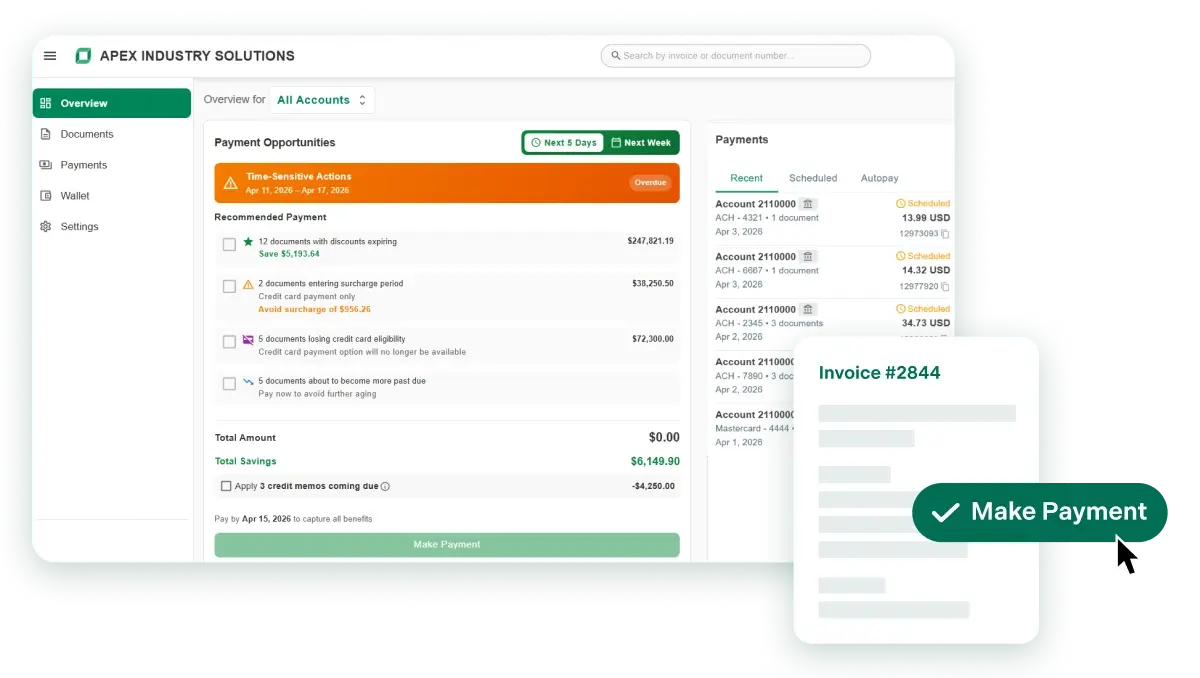
See Billtrust’s buyer payment portal in action
What Key Features Should I Look for in a B2B Payment Portal?
Not all portals are built the same. When AR and IT teams evaluate options, five capabilities separate modern B2B portals from legacy tools:
1. Branded, 24/7 self-service. Buyers shouldn’t feel like they’ve left your brand when they go to pay a bill. Portals should present your logo, your colors, and your language of choice. Multi-language support matters if you sell internationally.
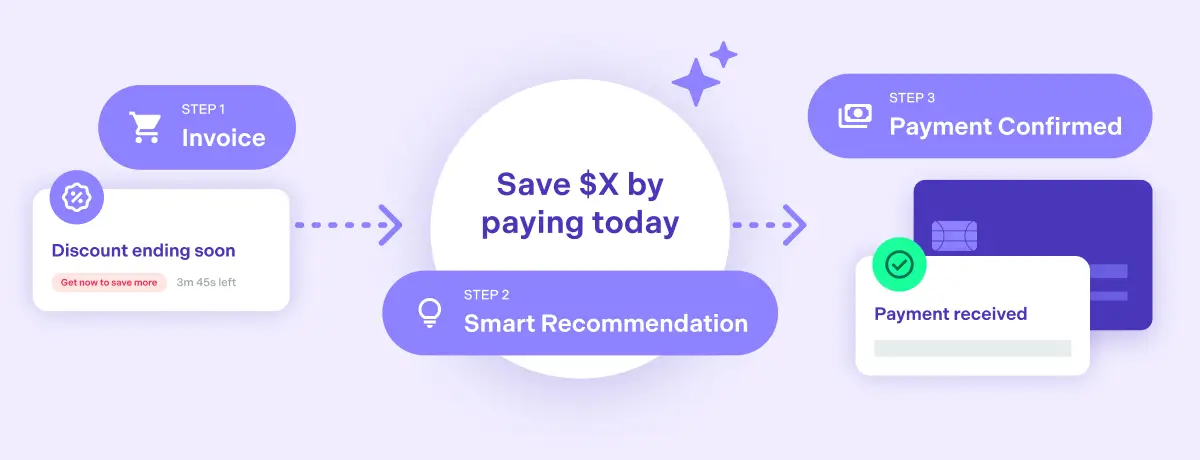
2. Smart payment recommendations. The portal should calculate early-pay discounts, guide buyers in methods that avoid card surcharging fees, and display optimal payment timing based on your active payment policies. It should then surface those recommendations at the invoice level and update on a daily basis, so customers aren’t looking at outdated information.
3. A variety of payment methods. ACH, credit card, debit card, virtual card, wire transfers, and international modalities (SEPA Direct Debit, iDEAL, Bacs, Bancontact) should all be available in one branded checkout experience with no separate gateway integration required.
4. Autopay managed by both buyers and suppliers. Buyers should be able to self-enroll in autopay programs and schedule payments automatically. However, AR managers should also be able to act on the customer’s behalf, enrolling clients into autopay and locking high-risk buyers into autopay programs, which means they need permission from the supplier to opt out. A lock-in strategy turns risky credit allocations into predictable, forecastable cash inflows with no buyer unenrollment permitted.
5. AR team self-service. AR managers should be able to make key changes without a support ticket or a change request. This should include configuring portal branding, payment methods, buyer access, and policy settings.
The Billtrust Buyer Payment Portal is built around these five capabilities. Smart payment recommendations, in particular, are a key differentiator.
What Payment Methods are Supported?
Coverage matters because offering a variety of payment methods removes excuses. If a buyer’s preffered payment method isn’t available in the B2B customer payment portal, they might default to whichever method is slowest for you — usually a paper check.
A complete online invoice payment portal should support, at minimum:
- ACH / direct debit: lowest cost payment method and the highest volume in most suppliers’ book of business
- Credit and debit card: automated processing that offers PCI DSS compliance as a built-in feature and Level 2/3 data generation to reduce interchange rate fees and card processing costs
- Virtual card: automatically captured, not manually keyed
- International modalities: SEPA Direct Debit, iDEAL, Bacs, Bancontact, TWINT where relevant
- Scheduled and on-account payments: for buyers who pay on custom terms
Pair a wide swath of payment types with automated surcharging (where permitted) and PayFac-level interchange optimization, and a B2B payment portal becomes a profit margin-protection tool as well as a productivity gain for AR teams. Billtrust clients using this combination have seen up to a 30% reduction in card processing costs, on top of DSO and productivity gains. For a deeper look at how card fees work and how to minimize them, see how to calculate credit card processing fees.
How Does a Payment Portal Accelerate Cash Flow?
Three mechanics drive the cash flow impact:
- Faster payments on the first touch. When buyers have a clear, 24/7 path to pay, payments land days earlier. Smart recommendations nudge them toward invoices with expiring discounts and away from the additional cost of surcharging fees. Most suppliers see the biggest gains in the first 60–90 days of rollout.
- Recurring cash inflows are locked in. Autopay features, especially supplier-managed Autopay for at-risk accounts, converts volatile, collections-heavy buyers into stable, predictable payments. That’s DSO reduction and forecast confidence all in one feature.
- Behavioral signals for your forecast. Every payment a buyer makes through the B2B customer payment portal feeds your AR data. When that data flows into a modern cash flow forecasting engine, your treasury team can stop forecasting from last week’s aging report and start seeing buyer behavior shifts on a daily basis before they compound into bigger risks like bad debt. Billtrust’s Cash Forecast alerts you to changes in your customers’ days-to-pay metrics, autopay enrollment, and payment modality. This way, you can stay ahead of financial risk.
The portal sits on the front end of AR intelligence, feeding behavioral on every transaction back into the forecast.
What Do Buyers Get from the Customer Experience?
Your buyers don’t care about your AR workflow. They care about getting vendor invoices off their plate quickly so they can move on.
A good self-service payment portal for B2B respects that. Buyers get:
- One login for all invoices and payment activity with your company
- A short path from open invoice to paid invoice, with their preferred method
- Visibility into payment history, disputes, and upcoming scheduled payments
- Guidance on when payment discounts end and which invoices are due first
- A branded experience that matches the supplier they trust
- Multi-language support wherever they operate
The measurable benefit is adoption. One building products distributor saw a 39% increase in customer engagement after moving to a modern B2B customer payment portal. That number shows up downstream in their DSO and their customer retention. Additionally, their “easy to do business with” rating is strong.
How Payment Portal Solutions Integrate with ERP and Other Financial Systems?
The last question IT teams always ask is the right one: “How does it work with the systems we have, and how much does it cost us to maintain?”
A modern B2B payment portal should be ERP-agnostic, with pre-built connections to major ERPs and 260+ AP portals. It should feed remittance data back into your cash application tool automatically, so the portal doesn’t create a new reconciliation problem on the back end.
When the portal is part of a unified AR automation platform, invoicing, payments, cash application, collections, and forecasting all work together. That’s the difference between maintaining point solutions and running a cohesive AR automation system.
Moving from a legacy Electronic Invoice Presentment and Payment (EIPP) tool to a modern B2B customer payment portal is a beneficial operational shift. Suppliers who do give buyers a clear, guided path to pay and get their AR team’s time back in return.
Why Do Self-Service Payments Matter for AR Teams?
The business case for B2B customer payment portals is straightforward: every payment your buyer completes faster and without help from the AR organization is a benefit provided in multiple ways: a superior customer experience, accelerated cash flow, and time given back to your team.
On the buyer side, the best B2B payment portals now surface information that used to require a phone call to answer common questions:
- Which invoices offer an early-pay discount and when do they expire?
- Which card types will trigger a surcharge, and what alternate payment methods are offered?
- Are we eligible for autopay and how do I enroll?
- Which payment timing makes the most sense given active payment policies and approved terms?
When buyers can see, at invoice level, what they should pay, when, and why, AR teams stop fielding payment questions, and DSO drops with those inbound calls.
On the AR side, self-service means your team stops acting as a help desk for payment mechanics. Instead of answering “how do I pay this?” a dozen times a day, AR managers configure the portal once, and the portal does the guiding. That time goes back into collections strategy, dispute resolution, and the accounts that actually need the attention of a human.
The proof points are real.
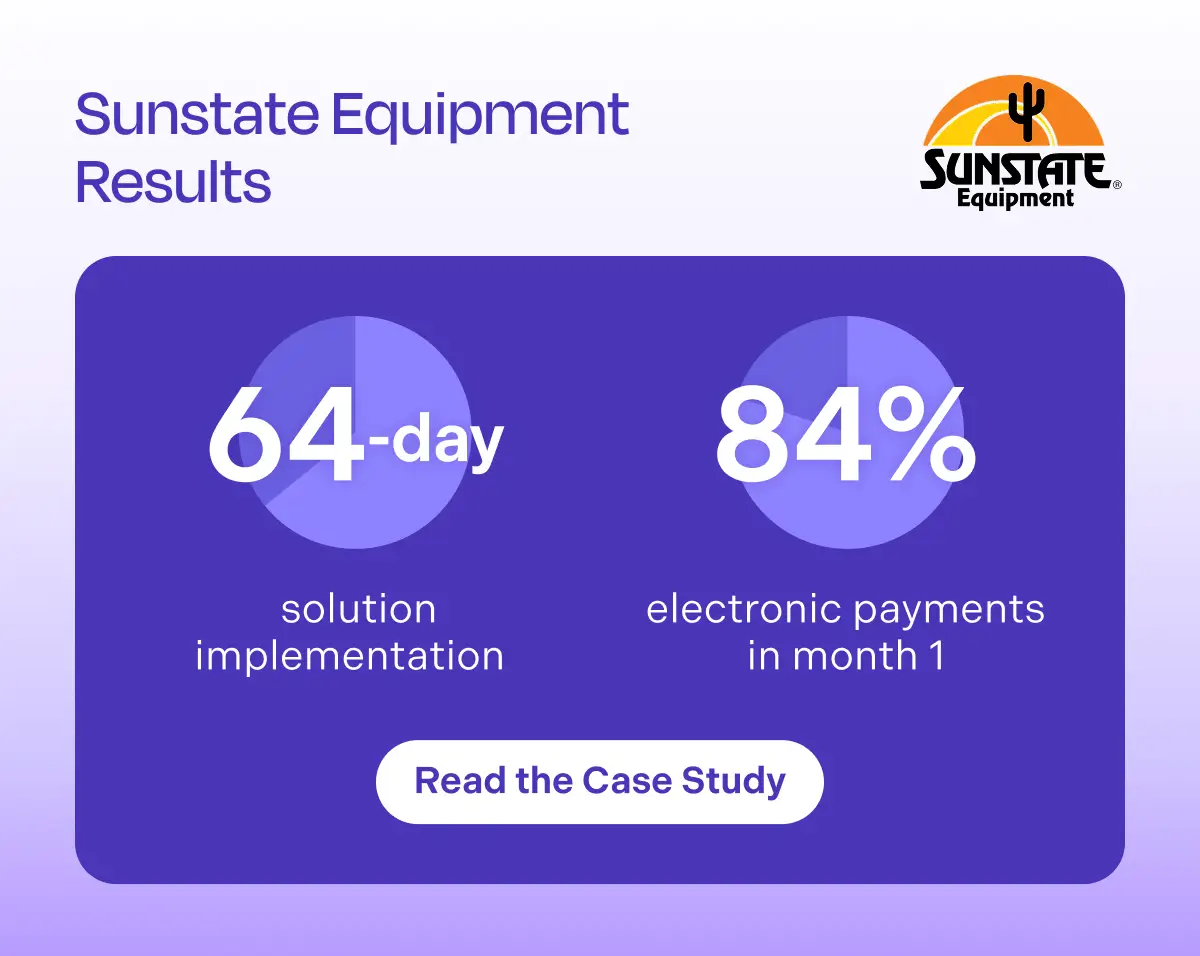
Sunstate Equipment went live on a new portal in 64 days and hit 80% electronic payments in the first month with 24/7 invoice access for their buyers.
Vulcan Materials saw a 23% increase in customer adoption after moving to a modern portal experience. These aren’t edge cases. They’re what happens when the portal is built for B2B complexity.
Every payment question buyer have can turn into a phone call, an email thread, and a missed early-pay discount. Every workaround your AR team offers (“send us a check,” “email the remittance”) is a minute wasted and another day payments are delayed.
When you’re ready to transform B2B customer payments, see the Billtrust Buyer Payment Portal in action by booking a 15-minute demo.